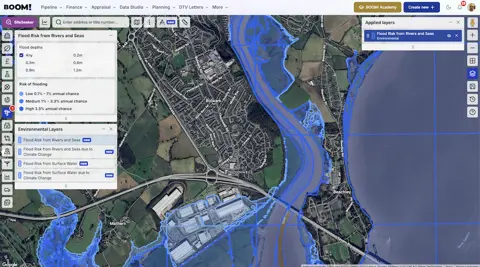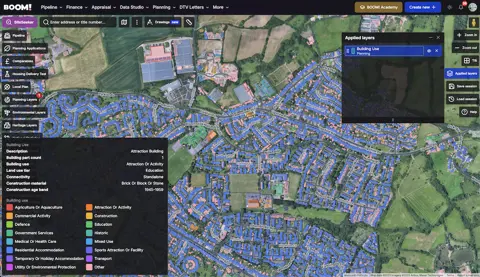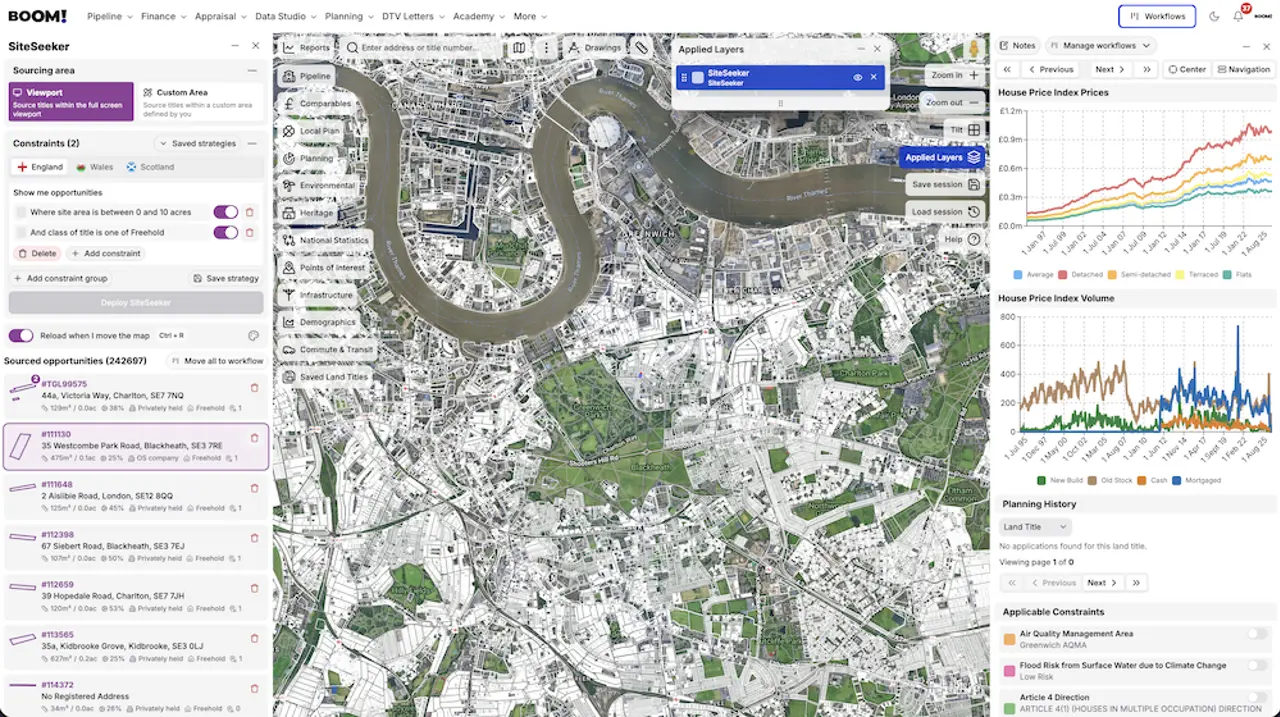
SiteSeeker v2 is live. It searches 30 million land titles across England, Wales and Scotland, holds hundreds of thousands of them on screen at once, and gives you 25+ new constraints to cut them down with — including BNG units, title split potential, last sold price and building age.
This post covers what changed on 6 November 2025, which new filters are worth reaching for first, and the five map layers that came with the rebuild.
Why we rebuilt SiteSeeker
v1 proved the idea and then hit its ceiling. To keep the map responsive we capped the number of titles drawn on screen, and anyone running a search across a whole district was working against that cap rather than against the data.
v2 replaces the rendering layer with a WebGL engine. Titles are drawn on the GPU rather than the DOM, so the map holds hundreds of thousands of them and stays smooth while you pan, zoom and refilter. Results update as you drag across the map instead of after it.
25+ new search constraints
The point of a constraint is to remove sites you were never going to buy before you spend an evening looking at them. These are the ones added in v2:
- Biodiversity net gain units — priority habitat units, watercourse units and hedgerow units, so you can size the BNG liability, or the BNG opportunity, before you offer.
- Title split opportunity — titles that look divisible.
- Habitable rooms and internal area — for conversion and sub-division plays.
- Built form and construction age band — detached, semi, terrace, and roughly when it went up.
- Last sold price and last sold date — a long hold at a low base is a different conversation from a purchase made last year.
- Road access — whether the access road is publicly maintained or private, plus road coverage across the title.
- Residential property type.
- Building height, footprint area and number of floors — the three numbers behind any airspace or upward-extension idea.
Last sold price is the one most people underuse. It reads from the same Land Registry price paid data covered in our guide to using sold prices to price a deal, and combined with a date filter it finds owners who bought a long time ago at a very different number.
A faster way to work through a shortlist
The flow you run every day is where most of the time goes, so that is where the UX work went.
- Keyboard navigation through results. Step through each title without going back to the mouse.
- Optional outlines on multi-property and multi-building sites, which stay visible while you investigate rather than disappearing on the next click.
- Grouped title characteristics, so the detail panel shows more without becoming a wall of fields.
- Live results as you drag rather than a wait after every map move.
Five new map layers
Constraints narrow a search. Layers tell you where to point it. These five arrived with v2 and toggle on and off from the layers panel:
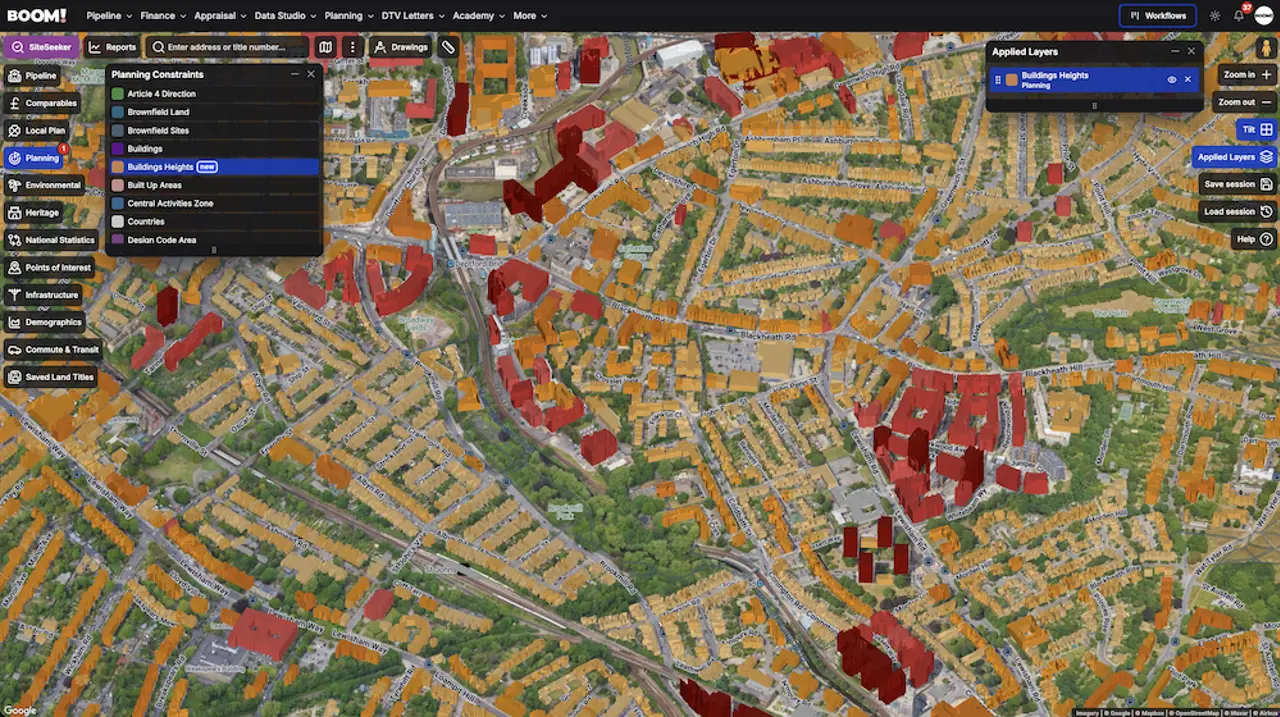
- 3D building heights — extruded building footprints, which makes an airspace opportunity visible rather than something you calculate.
- BNG priority habitats — habitat categories with estimated unit values.
- BNG watercourse areas — watercourses with estimated units, for offsetting and restoration.
- House price index — sale values and transaction volumes, so you can read a local market before you commit to a patch.
- Road networks and infrastructure — public and private roads, structures, hazards and access restrictions. Access kills more small schemes than planning policy does, and this is where you find out early.
What stayed the same
Your saved searches, saved titles and workflows carried over. Nothing needed rebuilding at your end, and the underlying title, planning and sales data is the same data, queried faster.
Where to start
Open SiteSeeker on a patch you already know and add one constraint you could not use before — last sold date, or building age, or BNG units. Compare what it returns against the shortlist you had. If the new filter is worth anything, it will either add sites you missed or remove sites you were wasting time on.
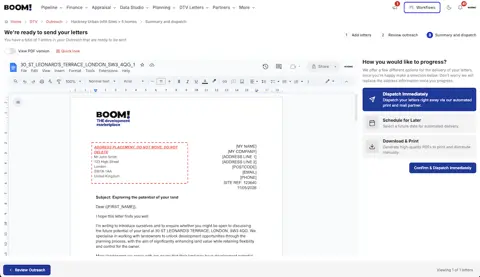
From there, the next step is usually ownership and outreach. Our guide to finding off-market sites without an agent covers the approach, and DTV v2 covers sending the letter.