Class Q lets you convert agricultural buildings into houses without a planning application. Up to ten dwellings per agricultural unit, each no larger than 150 sq m, 1,000 sq m in total — decided on prior approval in 56 days rather than fought through committee.
The right was rewritten in 2024 and the old rules are now gone entirely. This post sets out what Class Q permits as at September 2026, the two dates that decide whether a barn qualifies at all, and how to find sites that pass.
What Class Q is
Class Q sits in Part 3 of the General Permitted Development Order. It permits three things: the change of use of an agricultural building to Class C3 dwellings, the building operations reasonably necessary to make that work, and a single-storey rear extension.
You still apply to the council, but for prior approval on a defined list of matters rather than planning permission. The council cannot refuse you because the local plan puts a settlement boundary somewhere else, or because a parish council objects to the principle.
The Class Q rules as they stand
The current version came into force on 21 May 2024 under SI 2024/579, with a transitional window that let developers apply under the old rules until 20 May 2025. That window has closed. Anything you submit now is judged against the following.
- Ten dwellings, 1,000 sq m, 150 sq m each. The caps are cumulative across the original limits of the agricultural unit, and they count every Class Q conversion ever done there. The old 465 sq m large-unit allowance no longer exists.
- The building must have been part of an established agricultural unit on 24 July 2023. A building that joined the unit after that date needs ten years on it before Class Q applies. A former agricultural building still qualifies — unless it has been used for something non-agricultural since.
- No Part 6 agricultural building work on the unit in the last ten years. If an agricultural building has been erected, extended or altered anywhere on the holding under Part 6 Class A(a) or Class B(a) within ten years of the date you start, Class Q is unavailable. This kills more sites than any other limb, and it is not visible from the road.
- Suitable existing access to a public highway. Since 2024 this is a hard limitation, not just a prior approval matter. No access, no right — you cannot condition your way out of it.
- It must meet the nationally described space standard. The existing building, plus any proposed extension and building operations, has to be capable of complying. Article 3(9A) of the Order separately blocks any permitted development dwelling under 37 sq m.
- One single-storey rear extension, up to 4 m. It must sit on hard surfacing that was already there on 24 July 2023, and it cannot exceed the eaves height of the existing building or 4 m above ground.
- Excluded land. Article 2(3) land — conservation areas, National Parks, Areas of Outstanding Natural Beauty, the Broads and World Heritage Sites — plus SSSIs, scheduled monuments, safety hazard areas and military explosives storage areas. Listed buildings are out. Green Belt is not on that list, which is what makes Class Q unusual.
- Three years to finish. The conversion must be complete within three years of the prior approval date.
The conversion test that catches people out
Class Q permits the installation or replacement of windows, doors, roofs, exterior walls and services, plus partial demolition where reasonably necessary. That is the whole list. Planning Practice Guidance is blunt about the intent: “It is not the intention of the permitted development right to allow rebuilding work which would go beyond what is reasonably necessary for the conversion of the building to residential use” (Paragraph 105, Reference ID 13-105-20180615).
A Dutch barn with a steel frame and no walls usually fails. A blockwork or brick building with a sound roof usually passes. Internal works — a new floor, a mezzanine within the permitted floorspace, internal walls — are not prohibited. Get a structural engineer on it before you commit, not after.
What Class Q actually delivers
Keep the scale honest. 462 dwellings came through agricultural-to-residential permitted development in England in 2024-25, out of 7,681 from permitted development change of use overall. Class Q is a thin, specialised market. That is the argument for learning it properly: you are competing with far fewer people than on a greenfield allocation.
How to find Class Q sites
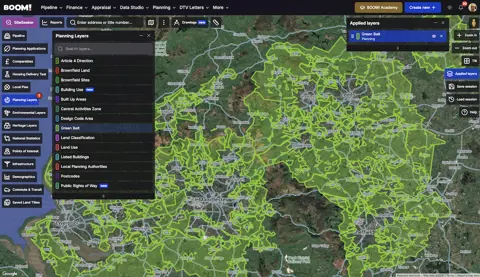
- Start with the designations, not the buildings. Article 2(3) land rules out whole districts. Filtering those out first is faster than assessing barns one at a time.
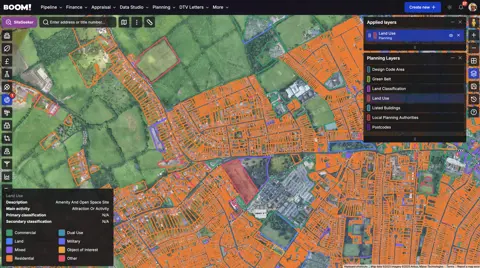
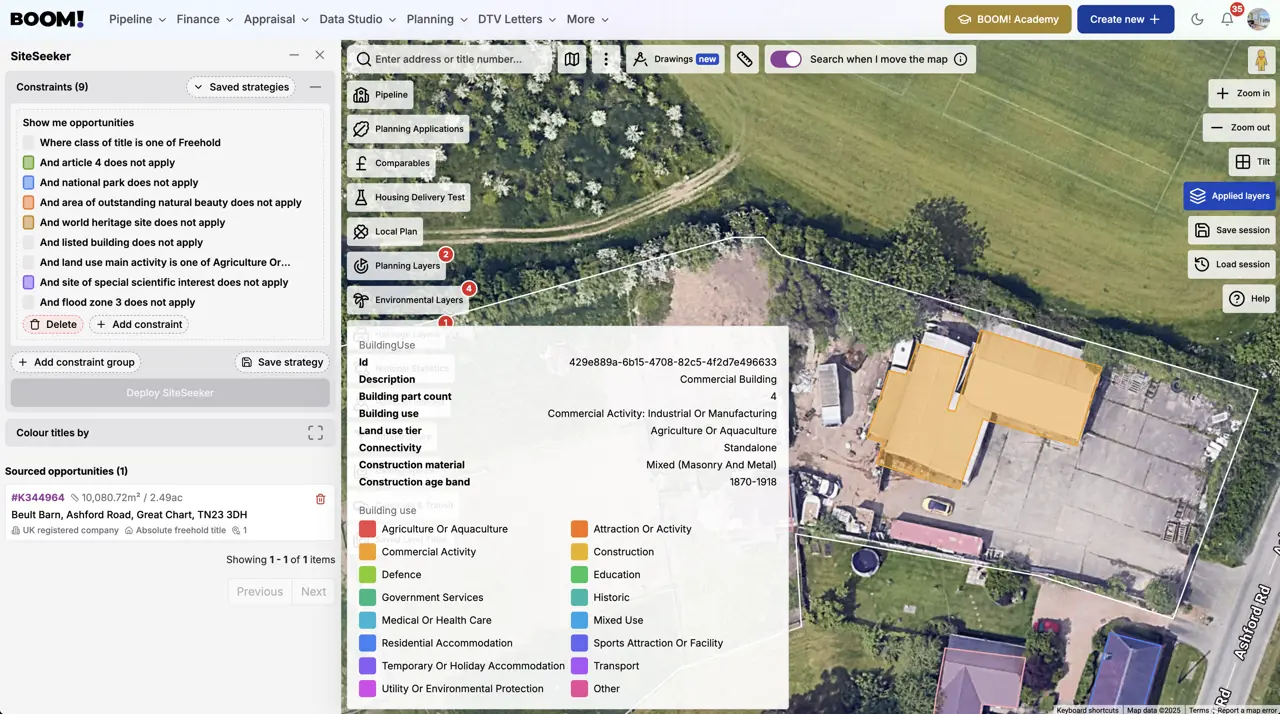
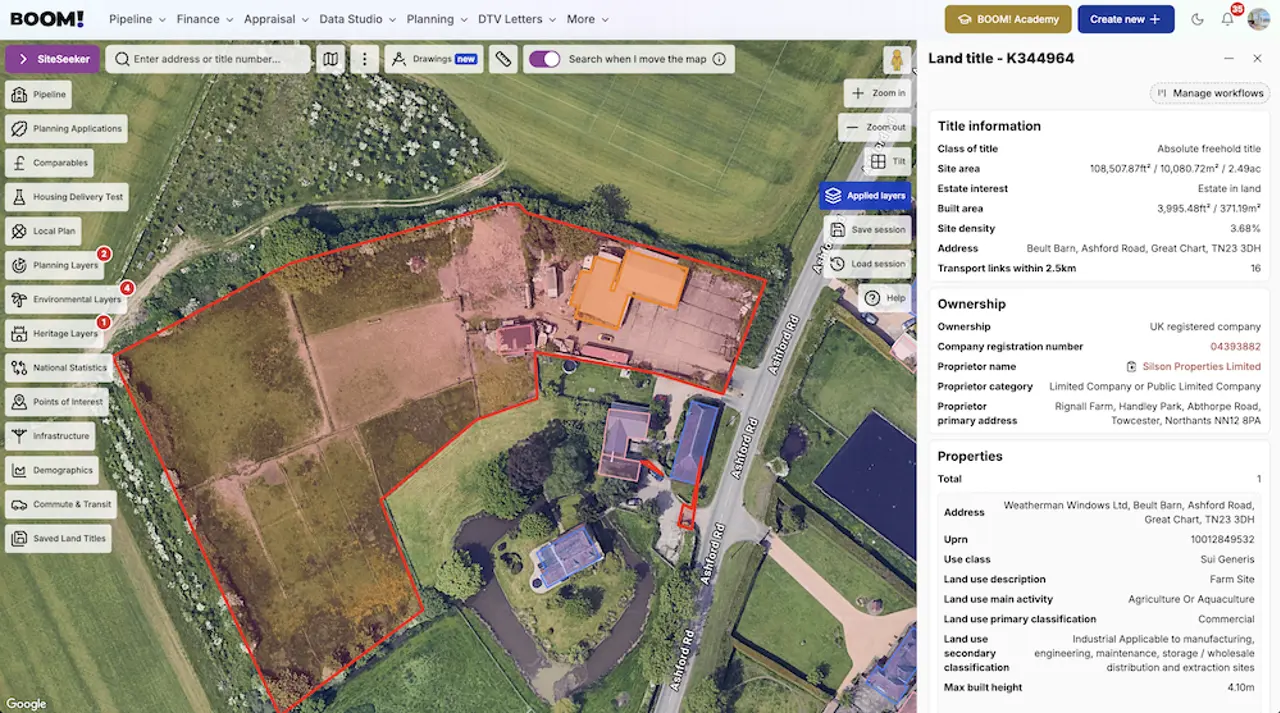
- Use BOOM! to narrow the search area. SiteSeeker lets you apply agricultural land, protected designations and flood risk as sourcing constraints, so you work through a shortlist rather than driving lanes.
- Read the council’s recent Class Q decisions. BOOM!’s planning application search covers prior approval applications. Reading a handful of local approvals and refusals tells you how that authority treats access, structural evidence and design — which is what you will be arguing about.
- Check the farm, not just the barn. The ten-year Part 6 bar and the ten-dwelling cap both apply across the whole agricultural unit. Look at the planning history of the holding before you approach anyone.
- Then approach the owner. BOOM!’s DTV letter product sends the approach. Arriving with a specific proposition — how many units, under which right, subject to what — separates you from a generic “do you want to sell” letter.
Class Q in context
Class Q is one of a small set of rights that reward developers who read the legislation rather than the summaries. If the barn fails on structure or access, the fallback is usually a full application, where where the settlement boundary falls starts to matter again. If the holding sits in Green Belt, that is not fatal to Class Q — and it is worth knowing what else is possible in the Green Belt before you write the site off.